
Sudirman Cup: China vs. Japan Defines a Rivalry Built on Depth and Nerve
he Sudirman Cup: China vs. Japan rivalry has become one of badminton’s clearest tests of team strength, tactical discipline and emotional control. China entered their recent meetings with the heavier historical record, but Japan repeatedly forced the contest into uncomfortable territory. The matchup is not decided by one superstar. It is a five-match examination in which a mixed-doubles pair can set the tone。a singles player can absorb enormous pressure, and a doubles team may have to recover from a difficult opening game within minutes. That balance gives Sudirman Cup: China vs. Japan its particular tension. A nation can dominate one discipline and still leave the court facing elimination.China’s success has traditionally rested on its ability to build a complete lineup. In the 2019 final, China defeated Japan 3-1, using reliable performances across the card rather than depending on a single spectacular result. The same pattern appeared in the 2021 final。when China again overcame Japan 3-1. Those victories reflected a familiar Chinese strength: depth. When one match goes against expectation, another player is usually capable of restoring control. Yet the scorelines disguise how narrow some of the exchanges were. Japan’s players have often extended rallies, attacked the body and turned slow, defensive phases into physical contests. In Sudirman Cup: China vs. Japan, the scoreboard may show a clear winner while several individual games remain separated by only a handful of points.Japan’s challenge has been especially sharp in the women’s singles and doubles events. Its players bring speed。
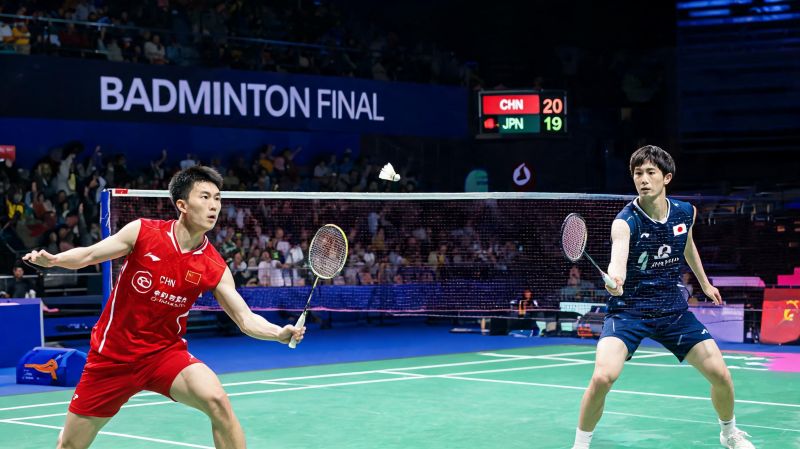
precision and a willingness to take the shuttle early, often forcing opponents to make decisions before they are ready. That approach can unsettle China’s normally measured rhythm. Japan’s men’s doubles teams have also shown the value of pressure at the net, where a fast interception can change a rally before the rear-court attack has fully developed. The problem is consistency across all five matches. A strong opening victory is useful, but it does not guarantee momentum in Sudirman Cup: China vs. Japan because the tie can change direction with one mixed-doubles rotation or an unexpected singles upset. Japan has come close to breaking China’s control, yet closing the entire contest has proved harder than winning individual battles.The 2023 semifinal offered the most recent major example of that volatility. China edged Japan 3-2 in a match that demanded contributions from every part of the lineup before China advanced to the final. The result carried more weight than a routine victory: Japan had pushed the defending champions into a deciding match, exposing the small margins separating the two programs. China eventually won the tournament。but its meeting with Japan was a warning that reputation could not substitute for execution. In Sudirman Cup: China vs. Japan, the mixed-doubles match often functions as an early temperature check. Players must manage communication, court coverage and service patterns under immediate pressure. A poor start can affect the entire team bench, while a close win can produce a surge that lasts through the next tie.That is why Sudirman Cup: China vs. Japan remains compelling even when China appears to hold the statistical advantage. China tends to offer the broader safety net。
with elite options in nearly every discipline and a deeper reserve of experience. Japan counters with sharper bursts of speed and a style capable of disrupting carefully prepared plans. The deciding factor is often less glamorous than a winning smash: it is the quality of the second serve, the patience to lift one more shuttle, or the judgment to avoid forcing an attack at 19-all. Sudirman Cup: China vs. Japan is a contest of accumulated details. China’s record gives it authority, but Japan’s recent performances have kept the rivalry alive by proving that authority must be earned again on every court, in every match and under the full weight of a team’s expectations.
Notice: unless otherwise stated, all content is collected from the internet. If it infringes your rights, please contact us for removal.