Atlético Mineiro Balances Historic Ambition with the Demands of Modern Brazilian Football
Atlético Mineiro remains one of Brazil’s most closely watched football institutions, a club whose identity is built as much on emotional loyalty as on trophies. Based in Belo Horizonte, Atlético Mineiro carries the intensity of a side that expects every home match to feel consequential. Its supporters, known as the Galo faithful。have turned the Mineirão and Arena MRV into stages for noise, pressure and occasional chaos. Atlético Mineiro’s defining modern achievement came in 2013, when Ronaldinho inspired the club to its first Copa Libertadores title. That victory changed the scale of expectation. Domestic success followed in 2021, when Atlético Mineiro won the Brasileirão and Copa do Brasil in the same season, driven by a squad combining experience, athleticism and technical quality. The club no longer measures itself only against local rivals Cruzeiro;its standards are set by Brazil’s strongest national teams and South America’s elite.The 2024 Copa Libertadores campaign offered a sharp reminder of both Atlético Mineiro’s reach and its unfinished business. Atlético Mineiro advanced through the knockout rounds with a mixture of defensive resilience and attacking bursts, eliminating Fluminense and River Plate before reaching the final. The run gave Atlético Mineiro a continental profile that had seemed distant during less stable years. In the final, however, Botafogo’s early advantage proved decisive, and the Rio de Janeiro club secured a 3-1 victory. Atlético Mineiro’s defeat was painful because the match exposed a familiar weakness: a team capable of controlling difficult ties can lose its rhythm when forced to chase the game from the opening minutes. The result did not erase the campaign’s importance。
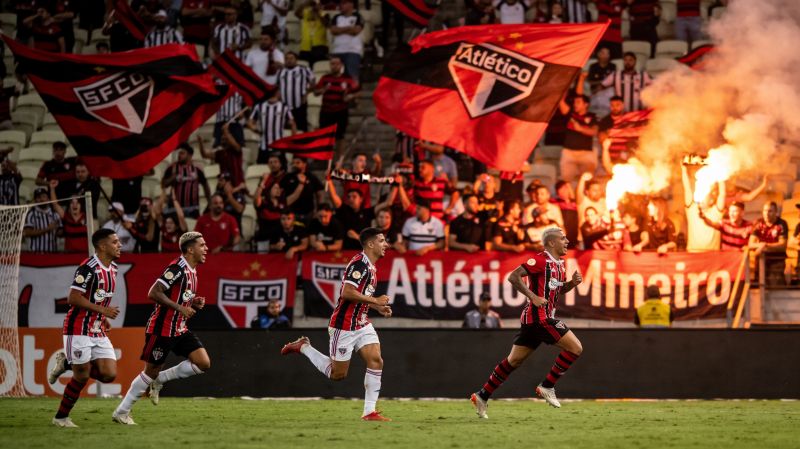
but it underlined how narrow the margins are at the highest level. One misplaced pass, one rushed challenge, and the entire emotional temperature changes.Squad construction has become a central issue for Atlético Mineiro. The club has relied heavily on experienced players。including veterans capable of managing tense matches and carrying responsibility in hostile stadiums. That approach produced memorable football, yet it also creates questions about pace, recovery and succession. Atlético Mineiro needs younger players who can press aggressively, cover large spaces and maintain intensity across a long Brazilian season. The challenge is financial as much as tactical. Atlético Mineiro operates in a market where transfer fees and salaries have risen sharply, while Brazilian clubs must balance ambition with debt, commercial commitments and the pressure to sell promising talent. The club’s move into the Arena MRV has added a new commercial dimension, but a modern stadium does not automatically create a sustainable sporting model. Recruitment must be precise, not merely expensive, and the coaching staff must develop depth rather than depend on a few headline names.On the pitch, Atlético Mineiro is most dangerous when its midfield can connect quickly with the forwards. The side has traditionally benefited from players willing to receive the ball under pressure, drive through central areas and attack the space behind full-backs. Atlético Mineiro also thrives on emotional momentum: a hard tackle。a loud response from the crowd and a sudden surge toward the penalty area can turn a cautious match into a storm. That same temperament can become a liability. Atlético Mineiro has occasionally allowed frustration to replace structure, particularly when opponents slow the game or defend in compact lines. In those moments, patience matters more than spectacle. A measured circulation of the ball may draw an opponent out, while repeated crosses often produce little beyond possession statistics. The club’s strongest performances tend to blend aggression with control, an important balance for a team competing in both domestic and continental competitions.For Atlético Mineiro, the next stage is less about rebuilding its reputation than refining it. The club already has the history, support and institutional weight to attract elite players and challenge for major trophies. What Atlético Mineiro needs is continuity: a clear sporting plan。a stable core and decisions that remain coherent when results turn against the team. Atlético Mineiro’s supporters will accept difficult seasons more readily than they accept uncertainty, especially after seeing the club rise from long periods of frustration to the Libertadores summit. The memory of 2013 still shapes every ambitious campaign, while the 2024 final has added another lesson about preparation and composure. Atlético Mineiro will continue to play with the urgency its identity demands. Whether that urgency becomes another trophy or another near miss will depend on details that rarely make the loudest headlines: fitness, recruitment, tactical discipline and the courage to trust a younger generation.
Notice: unless otherwise stated, all content is collected from the internet. If it infringes your rights, please contact us for removal.