
Hot Bird: The Satellite That Redefined European Broadcasting
Hot Bird isn't a single spacecraft but a constellation—a fleet of satellites parked at 13 degrees East that has been beaming television signals into European homes since the mid-1990s. If you've ever flipped through channels on a satellite receiver in Italy, Poland, or the Middle East, chances are Hot Bird carried that signal. The first Hot Bird launched in 1995。and the cluster now includes several active birds, each serving as a high-power relay for broadcasters who need wide coverage across the continent. Eutelsat operates the fleet, and its footprint stretches from the Atlantic to the Urals, with a particular density over Europe's most populated regions.
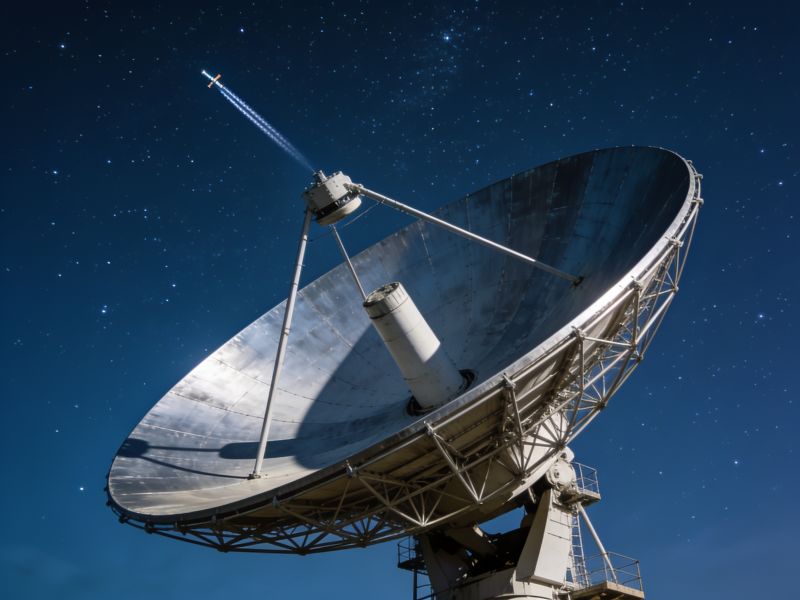
What makes Hot Bird stand out is its sheer capacity for channel aggregation. A single Hot Bird satellite can host dozens of transponders, each capable of carrying multiple TV or radio services. Walk into any satellite equipment shop in Rome or Warsaw, and you'll see dishes pre-set for 13°E—installers know that pointing there gets you the most free-to-air channels without fiddling with multiple LNBs. I've watched a neighbor in southern Italy realign his dish after a storm;he didn't bother with manuals. He just nudged it until the receiver locked onto Hot Bird, then tightened the bolts. That kind of grassroots familiarity is rare for a piece of space hardware.The fleet has seen its share of transitions. Hot Bird 6, launched in 2002, carried early high-definition feeds and helped push European broadcasters toward digital. Hot Bird 7A。launched in 2006, added more Ku-band capacity. Older birds get retired or moved to inclined orbits as fuel runs low—a mundane but critical ballet. Eutelsat doesn't publish a public schedule for these swaps, but tracking sites and enthusiast forums document the moves. One satellite operator I spoke with compared Hot Bird to a busy airport hub: slots are booked years in advance, and a single transponder failure can force a scramble to restore feeds for millions of viewers. The 13°E position is so valuable that even a brief outage makes industry news.Weather is the perennial enemy. Heavy rain in the Alps or a summer thunderstorm over the Balkans can degrade Ku-band signals。
and Hot Bird's footprint means a single storm cell might disrupt reception from Vienna to Tripoli. DTH providers often pair Hot Bird with a backup satellite at a nearby orbital slot, but switching isn't automatic for every receiver. I recall a hotel manager in Croatia complaining that a sudden hailstorm knocked out his Hot Bird feed during a major football match—guests weren't pleased. Technical teams eventually switched to a backup transponder, but the delay was long enough to matter. That fragility is part of the satellite TV reality: brilliant when it works, frustrating when the sky turns ugly.Hot Bird's future is tied to broader shifts in video distribution. Streaming eats into traditional broadcast, yet Hot Bird remains essential for regions with limited broadband and for broadcasters who need guaranteed one-to-many delivery—think live sports, international news。and niche cultural channels. Eutelsat has been migrating some capacity to its Quantum and Konnect satellites, but 13°E isn't going dark anytime soon. The fleet's longevity depends on how quickly terrestrial fiber and 5G fixed wireless reach rural pockets. For now, if you look up at night and see a faint moving point of light, it might be a Hot Bird satellite—quietly doing the job it was built for, one transponder at a time.
Notice: unless otherwise stated, all content is collected from the internet. If it infringes your rights, please contact us for removal.