Belgium vs. Finland: Tactical Discipline Defined a Quietly Decisive Euro 2020 Contest
Belgium vs. Finland produced a result that looked routine on the scoreboard but demanded patience from a Belgian side built to overwhelm opponents. Belgium won 2-0 in Saint Petersburg on June 21, 2021, completing a perfect group-stage campaign at Euro 2020. The scoreline。however, did not fully capture the tension of the evening. Finland defended in two compact lines, blocked central passing lanes and waited for mistakes, forcing Belgium to circulate possession for long stretches without finding a clean route into the penalty area. In this Belgium vs. Finland meeting, the difference came less from sustained attacking brilliance than from persistence and depth. Kevin De Bruyne repeatedly drifted into pockets between midfield and defence, while Romelu Lukaku occupied centre-backs and created room for runners. Finland’s shape remained disciplined, yet every clearance invited another wave. That pressure eventually changed the match’s rhythm and exposed the narrow margin separating control from danger.Finland entered Belgium vs. Finland with a straightforward objective: stay alive in Group B and make Belgium uncomfortable. The Finns had already shown their resilience during the tournament, earning a historic win over Denmark in Copenhagen before losing narrowly to Russia. Against Belgium, their defensive plan was clear from the opening whistle. Jukka Raitala and Paulus Arajuuri guarded the central channel, while the midfield screened passes toward Lukaku. When Finland recovered the ball。
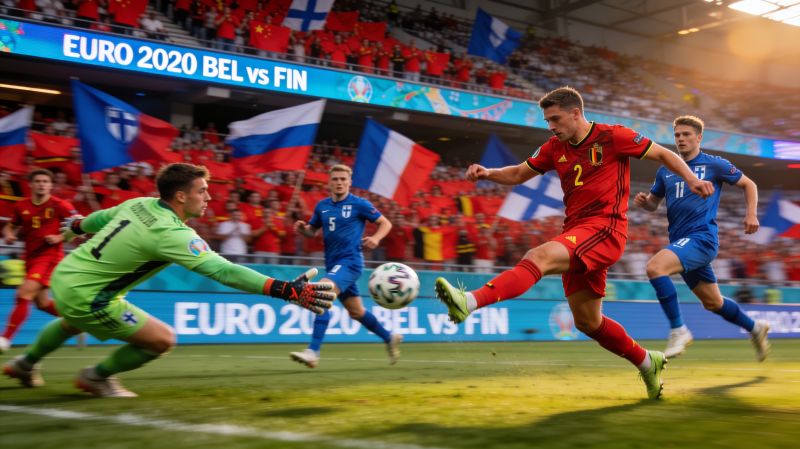
the first pass was usually safe rather than ambitious. That choice limited turnovers but also left Teemu Pukki isolated for long periods. The most threatening Finnish moments came from quick breaks and set pieces, not sustained possession. Belgium vs. Finland therefore became a contest of territorial pressure against defensive economy. Finland did not look overwhelmed;it looked stretched. The distinction mattered, because a stretched team can survive for an hour, but maintaining perfect concentration for ninety minutes against Belgium is a far more demanding task.Belgium’s breakthrough arrived through an element Finland had worked hard to control: a deflection inside the crowded penalty area. Thomas Vermaelen’s header struck Lukas Hradecky’s post and then rebounded off the goalkeeper, turning a stubborn Belgium vs. Finland battle in Belgium’s favour. The goal was officially recorded as an own goal, but it reflected the pressure created by repeated deliveries and second balls. Moments later, Lukaku finished with the calmness that has long defined his international career. He received the ball near the edge of the area, shifted away from marking pressure and drove a low shot beyond Hradecky. That sequence settled Belgium vs. Finland, yet it also underlined Finland’s earlier success. Belgium had needed a ricochet and a piece of individual quality rather than a flowing demolition. For Roberto Martínez。the result offered confirmation that his squad could win a tight match without forcing every attack through its most obvious route.The wider significance of Belgium vs. Finland rested on what it revealed about both teams. Belgium finished first in the group with nine points, while Finland ended third and missed out on the knockout stage because of goal difference. The Belgian performance was not flawless. Eden Hazard was still rebuilding his sharpness, the full-backs were cautious, and stretches of sterile possession allowed Finland to believe a shock remained possible. Yet Belgium vs. Finland showed why that generation was considered one of Europe’s strongest: when a match became awkward, the team could call on De Bruyne’s vision。Lukaku’s physical presence and a deep bench. Finland, meanwhile, left the tournament with credit despite the disappointment. Its compact defending, disciplined running and willingness to play without the ball gave Belgium genuine problems. The result was a useful reminder that tournament football is often shaped by small incidents rather than constant superiority.For observers revisiting Belgium vs. Finland, the match remains less memorable for drama than for its tactical texture. Belgium controlled possession and territory, but Finland controlled the emotional temperature, refusing to panic when attacks broke down. The first goal changed that balance. After the own goal, Finland had to take more risks, and Belgium found larger spaces between the lines. The second strike then closed the contest, allowing Belgium to manage the final minutes instead of chase another goal. That pattern has become a familiar lesson from Belgium vs. Finland: a well-organised underdog can make a stronger side appear ordinary until one incident breaks the structure. Belgium advanced with momentum and confidence, while Finland’s campaign ended with a sense of progress rather than collapse. In the end, Belgium vs. Finland was a controlled victory, but not an effortless one。
and that is precisely why the fixture still offers useful evidence about pressure, patience and the fine margins of international football.
Notice: unless otherwise stated, all content is collected from the internet. If it infringes your rights, please contact us for removal.